
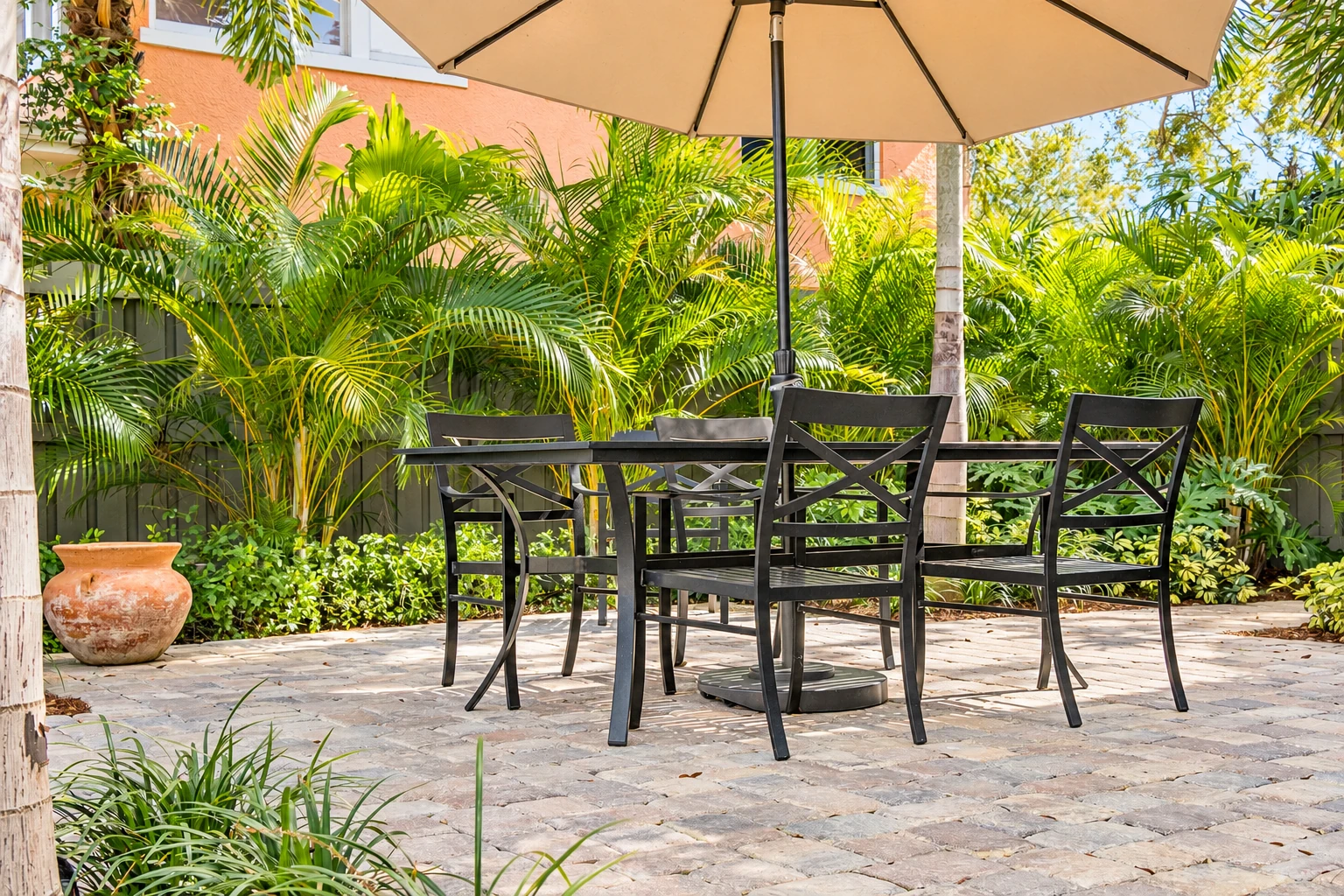
Walkway construction in Riverside CA - a path that sits flat on packed ground
Stepping around a cracked or sunken path to your door? We build concrete and paver walkways on packed ground, so the new one sits flat.
Get your walkway measured and priced
We answer (951) 462-2880 until 10 PM on weekdays and 9 PM on weekends, so you can call after work or send the form instead.
Should a Riverside walkway be poured concrete or pavers?
Walkway construction in Riverside, CA means building a path to your door, gate or yard in either poured concrete or laid pavers, set on compacted ground so it sits flat and gives you a clean, safe way in.
Most calls start with a path that's cracked, sunk at one end or never got past a worn strip of lawn. The price turns on the length and width, concrete or pavers, how much old path we break out and haul off, and how much digging and base the ground needs. The schedule turns mostly on the material, since concrete goes in faster than pavers laid one at a time, and on a city permit if the path reaches the street, which we pull before we start. If the walk meets a new drive, our driveway pavers work can tie the two together. The written estimate I hand you says what we'll build and how, so you know exactly what you're agreeing to.
Why Riverside homeowners call Keystone Riverside Concrete and Masonry for walkways
The owner measures every path
I come out myself to measure the path and write the estimate, and a lead mason runs the crew once we start. The person who priced your walkway is the one who checks it.
Licensed and fully insured crew
We're licensed and fully insured. The City of Riverside only issues permits for paving in a street, alley or easement to a state-licensed contractor with the right class for the work.
In business since 2017
I laid block and brick for a big commercial outfit before starting this company, and that's where I learned to build to the drawings and an inspector's eye. A garden path gets the same treatment.
On a walkway, the part you never see is the dirt under it, so that's where I start. Call or send the form and I'll come measure yours.
How our walkway construction goes, from dirt to finished path
First we pick between poured concrete and pavers, and I'll ask how soon you want it done and how you'd want to fix it down the road. Then we dig out the path, break up and haul off any old one, and compact the soil, because a path is only as flat as the dirt under it. For concrete we set forms, pour and finish it, then cut control joints, grooves that tell the slab where to crack, because concrete moves with the temperature and any cracks should land on our lines, not across the middle of your walk. For pavers we set a base, lay each piece and fill the joints, and either way we clean up before we leave.
A walkway usually runs past other masonry. If you want a low wall along the path or around a planting bed, we handle brick wall installation on the same job, and our stone masonry covers stone steps or edging where the path changes height.
Poured concrete path
Suits you if you want the path finished sooner and like one plain surface that's easy to sweep. It's a single slab, so the joint layout we plan before the pour does a lot of the work.
Paver path
Suits you if you'd rather fix one piece than patch a slab, and you don't mind a longer build while each paver goes down by hand. It also gives you more patterns and colors to choose from.
How do you know your walkway needs replacing?
Cracks across the slab
A crack running across a concrete path with no grooves cut in it usually means the slab moved and broke on its own line. Leave it and the edges lift into a toe-catcher.
One end has sunk
A path that dips near the steps or the lawn usually sits on soil that was never packed. It keeps settling, and water can start running toward the house instead of away.
Pavers rocking underfoot
Pavers that rock or sit higher than their neighbors usually point to a thin or washed-out base. Waiting lets it spread, because one loose piece gives the next ones room to shift.
A dirt track in the lawn
A bare strip worn from the driveway to the door means people already walk there, path or not. It turns to mud after watering and gets tracked right into your entry.
What happens after you call about a walkway in Riverside?
Call us or send the form
You call (951) 462-2880 or send the form, and I come out to look at the path and measure it. You get a written estimate saying what we'll build and how.
We handle permits, then build
If the path needs a city permit, we pull it, and the city has to sign the plans before it issues. Then our lead mason's crew digs, compacts and builds the path.
I check it before we finish
I walk the finished path before we call it done, looking at the slope, the joints and the edges. Then we clean up and haul away the dirt and old concrete.
Walkway questions we hear most
These are the questions Riverside homeowners ask us most about new walkways. If yours isn't here, call or send the form and ask about your own path.
Is a concrete or paver walkway easier to repair?
Pavers are easier, because a single paver that heaves, cracks or stains can be pulled out and replaced without disturbing the rest of the path. On concrete a patched crack stays visible, which is why the joints we cut before the pour matter so much. Satisfaction guaranteed on every job, whichever you choose.
How much does a concrete walkway cost in California?
A 4-inch concrete slab, installed with labor and materials, usually costs about $9 to $18 per square foot in California. That's a statewide market figure, not our price, and where your job lands depends on the path's size, how much old path comes out and how much ground prep it needs. Your written estimate lays out what we'll build and how for your path.
Do I need a city permit for a walkway near the street in Riverside?
Yes, if the work is in a street, alley or easement, because the city issues construction permits for paving or building sidewalks and similar work there. A separate street opening permit comes in if the job needs traffic control or keeps people off the sidewalk. We pull the permits and schedule the inspections, and if it isn't clear whether your path needs one, we check with the city before we start.
What causes a walkway to sink, and does the soil matter?
Loose soil under the path is the usual cause, and paver industry guidance calls compaction critical because well-packed ground settles less. The same guidance says the right base depth depends on traffic, soil type, drainage, moisture and climate, and the local soil maps rate ground around Riverside for how much weight it carries and how much it swells and shrinks. We compact the ground under every path and set the base for what we find.
What is the best way to pour a concrete walkway in hot weather?
The best step is to ask your crew how they plan for it, because high heat, low humidity and high wind all affect concrete and how a crew mixes, moves and places it. We go over our plan at the estimate and set the pour time with the forecast in mind.
How do I get underground lines marked before digging a walkway?
Check with your local utility companies before anyone digs, which is what paver industry guidance advises, and many areas have one phone number you call at least two days ahead to get lines marked. Bring it up at the estimate and we'll settle who makes the call. A shovel is a poor way to find a gas line.
Get a written walkway estimate
Tell us the path's rough length and width, concrete or pavers, and whether it meets the street or sidewalk. We'll reply within one business day to set up a free on-site estimate, with no obligation.
Walkways in concrete and pavers
Masonry that goes with a walkway
Brick wall installation
A low brick wall along a new walkway keeps soil and mulch off the path and gives the edge a finished line from the street to your door.
Learn moreStone masonry
Where your yard steps up or down, stone steps or a stone border carry the path across the change in grade so nobody has to guess their footing.
Learn more